
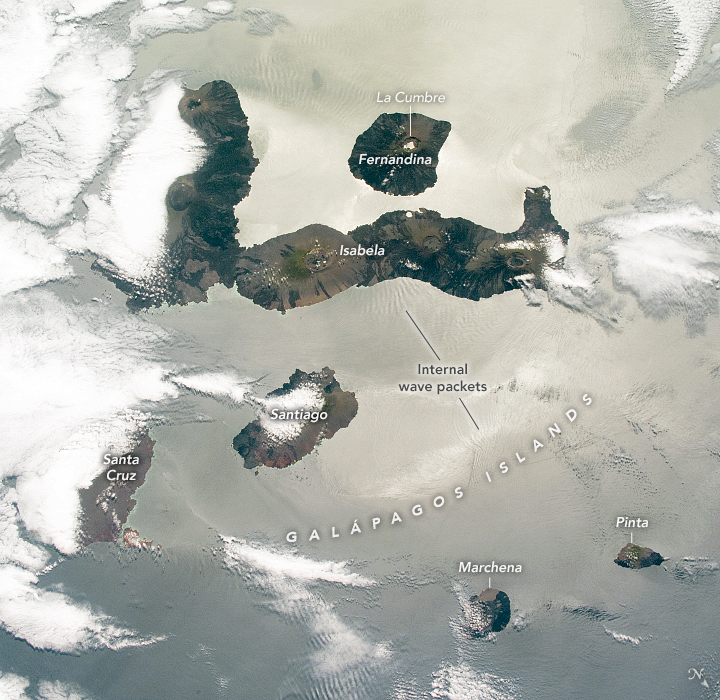
The Galápagos Islands were officially discovered in 1535 when Fray Tomás de Berlanga, the fourth Bishop of Panama, was blown off course on his way to Peru and arrived at an archipelago of volcanic islands that appeared on no map because they had not been included on any map. He described iguanas, giant tortoises, and birds of a peculiar tameness, found no fresh water, ate cactus pads to survive, and eventually left without naming the place, which received its current name from the giant tortoises that were its most visible inhabitants: galápago is old Spanish for saddle, a reference to the shape of the tortoise shell. The Inca may have reached the islands sixty years before Berlanga, though the evidence for this is oral history rather than documentary record.
Charles Darwin arrived in September 1835 on HMS Beagle and spent five weeks in the archipelago, collecting specimens and making observations that contributed to but did not immediately produce the theory of natural selection. The common version of Darwin’s Galápagos story, in which he sees the finches, immediately understands the mechanism of evolution, and returns to England with the theory complete, is inaccurate in almost every particular. Darwin did not fully appreciate the significance of what he was seeing until after he returned to England and discussed his collections with the ornithologist John Gould, who identified that the birds Darwin had collected from different islands, which Darwin had not even consistently labelled by island of origin, were in fact different species rather than varieties. It was the retrospective analysis that produced the insight, not the initial observation. The finches that now bear his name were reconstructed from his poorly organised collections after the fact.
Charles Darwin arrived in September 1835 on HMS Beagle and spent five weeks in the archipelago, collecting specimens and making observations that contributed to but...


Share