One Hundred Days

One Hundred Days

4 min read

Share

Copied!
Tweet WhatsApp

“Not because of the temples or the fish market or Hiroshima, though all of those were significant in different registers, but because of the quality of attention the country requires.”

One hundred days in, sitting in a café somewhere in Southeast Asia with a coffee and the particular kind of tiredness that is not unpleasant, it seems worth trying to account for what has actually happened.

The plan, when I stood on Barnsley high street in February with an STA Travel itinerary and a considerably lighter bank balance, was a sequence of countries across three continents, twenty of them, two years. The plan has already shifted in ways I didn’t anticipate and could not have anticipated, because the shift was produced by the experience itself. You arrive in Japan expecting to see Japan, and you do, but what you also find is that the thing you thought you were doing, collecting sights and experiences across a list of destinations, is not quite what you’re actually doing. What you’re actually doing is learning how to look at places, and that takes longer than any itinerary allows for, and the looking keeps changing the more you do it.

Everything there works with a thoroughness that is disorienting if you come from a place where most systems work most of the time and the exceptions are considered normal.

One Hundred Days

Japan was the first revelation. Not because of the temples or the fish market or Hiroshima, though all of those were significant in different registers, but because of the quality of attention the country requires. Everything there works with a thoroughness that is disorienting if you come from a place where most systems work most of the time and the exceptions are considered normal. The trains arrive to the announced second. The bins are designed so that recycling happens correctly by default. The pavements have raised braille guides for blind pedestrians running the length of every major street in every city. None of this is performance. It is simply how the country has decided things should work, and being inside it for two weeks adjusts your calibration for everything that follows.
Hiroshima and Nagasaki adjusted something else. I had studied the Second World War at school and had a serviceable understanding of the bomb, the strategic rationale, the historical debate. Being in the places where it happened is different from knowing about it. The old man at the peace park in Nagasaki, standing by the melted factory bells every day with his water bowls and his story, was the moment the abstract became specific. He survived because his boss sent him to another part of the building ninety seconds before detonation. His boss did not survive. He has been standing next to those bells for decades trying to make sense of that, and when he tells you his story he is not performing grief but simply reporting a fact that has never become ordinary.

The plan, when I stood on Barnsley high street in February with an STA Travel itinerary and a
considerably lighter bank balance, was a sequence of countries across three continents, twenty of them, two years.

The Philippines surprised me in ways I was not prepared to be surprised. I had gone there partly for the weather and the cheap beer and the photographs I had seen that looked like the Maldives. What I found was a country with a complicated history and a population of genuine warmth and considerable resilience, living under the structural consequences of three centuries of Spanish colonialism and fifty years of American administration and twenty years of Marcos, none of which had left the economy or the political landscape in particularly good shape. The gap between Makati and the streets outside Makati is not a gap that formed naturally. It was produced by decisions made over centuries, and the people living on both sides of it are managing the consequences with more grace than the situation probably deserves.

The things I know now that I did not know in February are mostly practical. Backpacking is easier than I expected. You need less than you think. You will make friends with the speed and sincerity that is only possible when everyone around you is also far from home and in the same degree of uncertainty. You will also get food poisoning in Kathmandu and feel genuinely terrible for four days, which is humbling in its own way.

You will make friends with the speed and sincerity that is only possible when everyone around you is also far from home and in the same degree of uncertainty.

One Hundred Days

The pavements have raised braille guides for blind pedestrians running the length of every major street in every city.

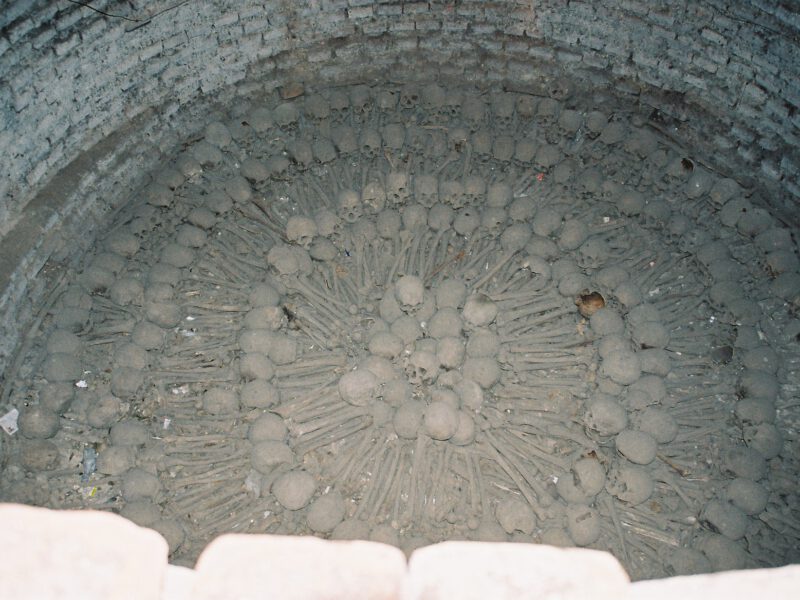
The things I did not expect: that standing at Everest base camp would feel less like achievement and more like proximity to something completely indifferent to human ambition. That the Killing Fields of Cambodia would produce in me not grief exactly but a kind of rearrangement of proportion, a sense of what serious actually means when applied to human events. That the best conversations of the trip so far have happened in the least planned circumstances, in spa pools and on overnight buses and at 4am in hostels with people whose surnames I may never know.

One hundred days. Fifty thousand miles to go.