Kuala Lumpur: A Dissertation, the Petronas Towers, and the Art of Begging

City Break

Kuala Lumpur: A Dissertation, the Petronas Towers, and the Art of Begging

I finished my dissertation at a hostel in the shadow of the Petronas Towers while discovering a city that proved easier to be in than to love.

5 min read

📍 Kuala Lumpur, Malaysia

Share

Copied!
Tweet WhatsApp

“We were the only people up there, circling slowly above a city that looked, from that height and in that light, more coherent than it does from street level.”

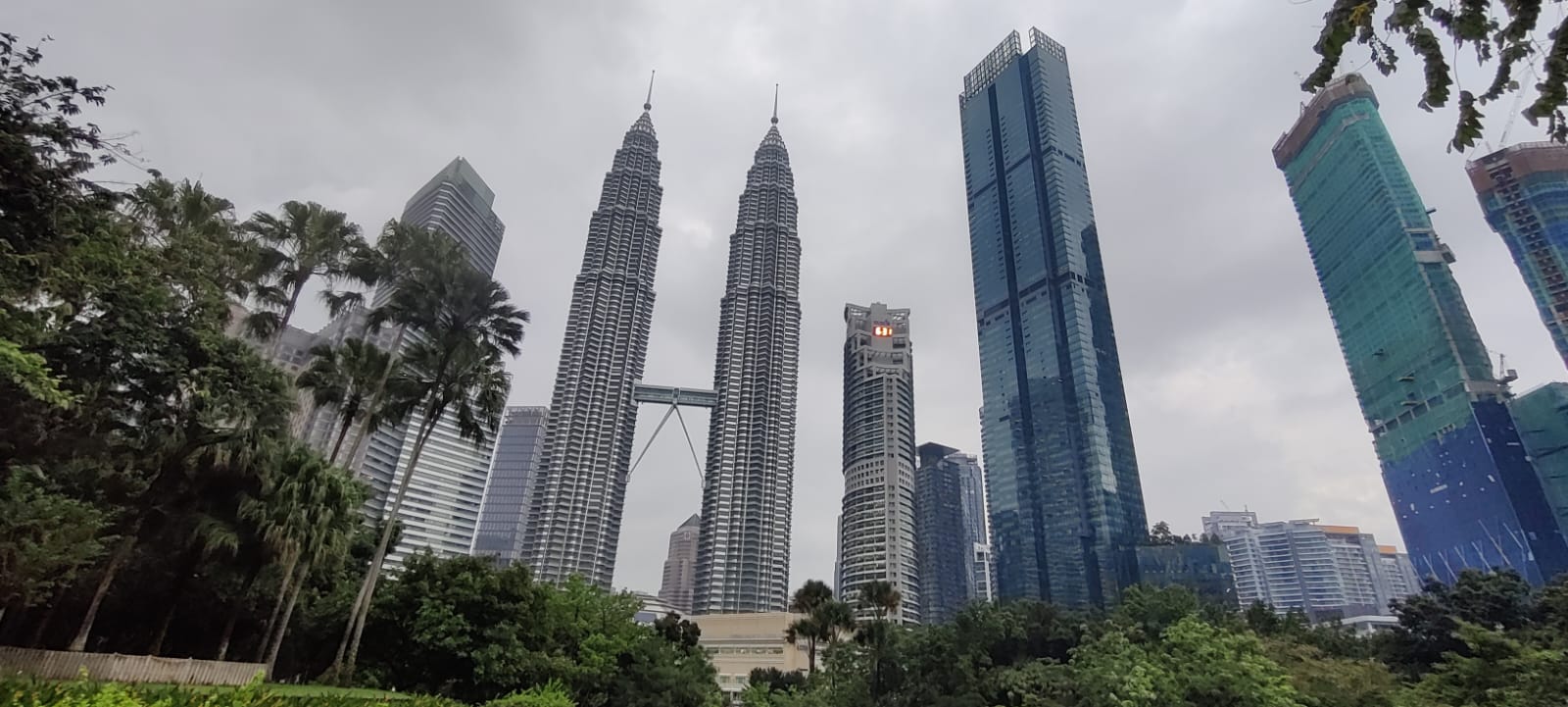
The Petronas Twin Towers are the kind of landmark that cities build when they have something to prove, and Kuala Lumpur in the mid-1990s had something very specific to prove. The towers were commissioned by Mahathir Mohamad, Malaysia’s prime minister for twenty-two years, as the centrepiece of a development project called the Kuala Lumpur City Centre, and they opened in 1998 as the tallest buildings in the world, a title they held until 2004. Mahathir was explicit about what they represented: not just the Malaysian petroleum company that anchors them, but the country’s emergence as a modern industrial economy, its capacity to build things that the West and Japan had assumed only they could build. The architect was Cesar Pelli, an Argentine-American. The contractors were Korean and Japanese. The steel was fabricated in multiple countries. Malaysia’s Vision 2020 development plan, Mahathir’s roadmap to developed-nation status, was the ideological framework they stood inside. You can read all of this as a complex of meanings or you can simply look at the towers on a clear morning from the park below and acknowledge that they are genuinely beautiful, which they are.

I spent three weeks in Kuala Lumpur at a hostel called BackHome, which was, by some considerable margin, the best hostel I had stayed in to that point, clean and well-designed and run by staff who seemed to have a genuine interest in whether you were having a good time, which is not as common as it should be. The reason for staying three weeks rather than three days was my dissertation. I was completing an Executive MBA, which I had begun before the trip and which had a submission deadline that the trip’s timeline had been constructed around, somewhat optimistically. The dissertation was twelve thousand words on motivation and performance in contact centre environments, specifically examining whether casual dress on Fridays produced measurable changes in output. It does, as it turns out. Wearing casual clothes makes you work harder than wearing a suit. This finding is either reassuring or slightly deflating depending on your relationship with formal dress.

1998

The towers were commissioned by Mahathir Mohamad, Malaysia's prime minister for twenty-two years, as the centrepiece of a development project called the Kuala Lumpur City...

Kuala Lumpur, Malaysia

Malaysia’s history is worth knowing before you arrive, because it explains several things that are otherwise puzzling. The country became a British protectorate in stages through the nineteenth and early twentieth centuries, with Britain drawn in initially by the tin and rubber that the Malay peninsula produced in quantities that made it one of the most economically significant territories in the empire. The rubber alone was transformative: Malayan rubber, extracted by Tamil labourers brought from South India under conditions that would now be described as forced labour, supplied the expanding global demand for tyres as the automobile industry grew. When Britain finally left in 1957, it did so without fully resolving the ethnic tensions that the colonial economic model had created by importing significant populations of Chinese workers for mining and commerce alongside the Tamil rubber tappers, leaving a country whose three main communities, Malay, Chinese, and Indian, had not been designed by history to form a natural whole. The political arrangement that resulted is a careful management of those tensions, with affirmative action policies favouring the Malay majority, a constitutional monarchy with a rotating federal kingship shared between nine hereditary rulers, and an economic model that has produced genuine development while maintaining a political system that restricts certain kinds of dissent in ways that are worth acknowledging even as you admire the view from the Skybar.

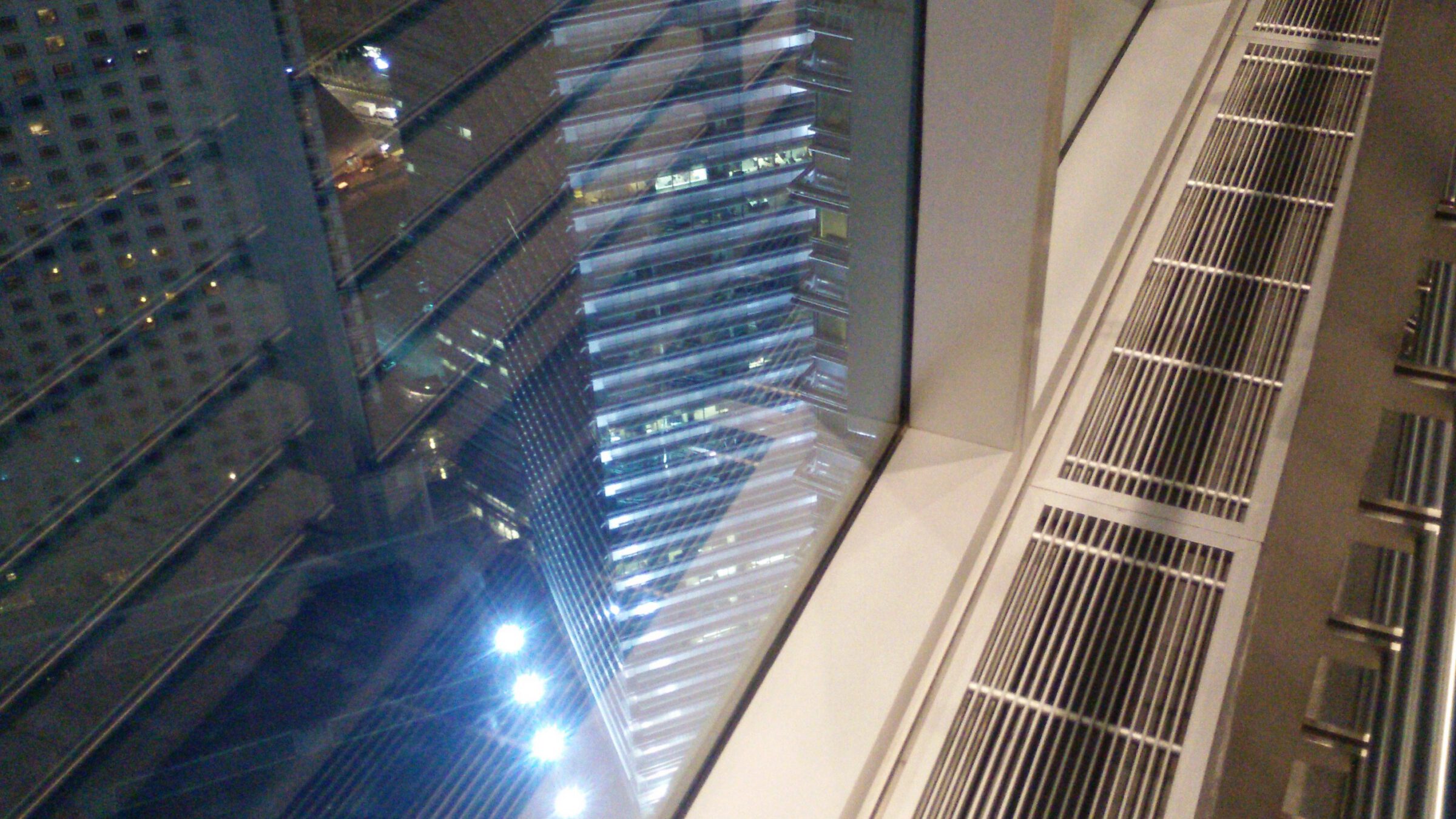
The KL Tower, which predates the Petronas by two years and stands a few kilometres away on a hill in the city centre, is less famous and considerably more accessible. Tom, a Briton I met at BackHome who was heading to Cambodia the following day, came with me on an afternoon visit that nearly didn’t happen because we arrived thirty seconds after the official cut-off for new visitors. We begged. This is not something I recommend as a general strategy for museum entry, but Tom’s face during the process was genuinely affecting in a way that clearly moved the woman at the desk, and she let us through. The revolving restaurant at the top serves a good pot of tea. We were the only people up there, circling slowly above a city that looked, from that height and in that light, more coherent than it does from street level.

Mahathir was explicit about what they represented: not just the Malaysian petroleum company that anchors them, but the country's emergence as
a modern industrial economy, its capacity to build things that the West and Japan had assumed only they could build.

The dissertation was finished early, which was the first academic deadline I had met ahead of schedule in my adult life and which I attribute entirely to the fact that I had nowhere else to be and nothing else to do. The acknowledgements section thanked the people at my former employer who had made the research possible. I also quietly thanked BackHome’s staff for bringing me Malaysian food to try while I was writing, which was the kind of unsolicited hospitality that tends to happen in KL with a frequency that surprised me.

KL is an easy city to be in and a difficult one to love. The infrastructure is modern and the food is exceptional, the hawker centres producing a combination of Malay, Chinese, and Indian influences that is the direct culinary legacy of the colonial labour arrangements that brought those communities together, something that is worth remembering when you eat the roti canai in the morning. The malls are enormous and well air-conditioned. The traffic is considerable. The city is young by the standards of the region, established formally in the mid-nineteenth century as a tin-mining settlement at the confluence of the Gombak and Klang rivers, the name meaning muddy confluence in Malay, which is accurate and not the most promising start for a capital city but which hasn’t prevented it becoming one worth visiting.

2020

Malaysia's Vision 2020 development plan, Mahathir's roadmap to developed-nation status, was the ideological framework they stood inside.

Kuala Lumpur, Malaysia

The country became a British protectorate in stages through the nineteenth and early twentieth centuries, with Britain drawn in initially by the tin and rubber...

I will be back in August for a Gap Adventures trip that starts in Bangkok and finishes in Bali. That version of KL will be different. Most return visits are.

Trip Guide

Kuala Lumpur, Malaysia

3 weeks

☀️

Best time to visit

November to March offers the driest weather and most comfortable temperatures. Avoid the monsoon seasons (May-September and October) when rainfall is heaviest.

✈️

Getting there

Fly from the UK to Kuala Lumpur International Airport, typically via Middle Eastern or Asian hub airports. The journey takes 13-16 hours with at least one stop.

🏨

Where to stay

BackHome hostel is an excellent choice offering clean, well-designed accommodation with genuinely hospitable staff. Budget hotels and mid-range options are abundant throughout the city centre and Bukit Bintang districts.

💰

Daily budget

A comfortable daily budget of £35-60 covers accommodation, food, and activities in Kuala Lumpur.

Flights £400-650
Stay £8-25
Food £8-20
Activities £5-15
Transport £3-8
Estimated daily total £24-68

Good to know

  • Visit the KL Tower on a clear afternoon for the best views of the city skyline and a revolving restaurant serving excellent tea
  • Explore the hawker centres to experience the unique blend of Malay, Chinese, and Indian cuisines that reflects the city's multicultural heritage
  • Understand Malaysia's colonial history before arriving—it explains much about the modern political and economic structure
  • The Petronas Twin Towers are beautiful but often crowded; visit early morning for the best experience
  • Use the LRT system for efficient and affordable city transport, especially during peak traffic times

Kuala Lumpur is very affordable for UK travellers, with excellent value in hostels, hawker food, and local transport. Air-conditioned shopping malls and modern infrastructure make comfortable living possible at budget prices.

Estimates based on research at time of writing. Check current rates before booking.