Niagara Falls: Underwhelmed, Then Not

Travel Guide

Niagara Falls: Underwhelmed, Then Not

I was initially disappointed until I ascended to the elevated viewpoint and witnessed the true scale of the falls.

4 min read

Share

Copied!
Tweet WhatsApp

“The word magnificent resists me because it is too small, but it is the right kind of word.”

Ashley is Canadian, a teacher, and the first person I would describe as a genuine friend made through the specific mechanism of travelling: we met in the Philippines in 2011, spent a week and a half travelling together through Batangas and Boracay, and had kept in intermittent contact across the years and countries that followed. When she sent a message suggesting she come to Niagara Falls with me, the answer was immediate. She arrived at the car hire place with coffee and breakfast, which is the kind of friend she is.

Niagara Falls is the collective name for three waterfalls at the international border between the United States and Canada, of which the Horseshoe Falls on the Canadian side is by far the largest, carrying roughly ninety percent of the water that flows from Lake Erie over the escarpment into the gorge below. The falls have been dropping at this rate for roughly twelve thousand years, since the glacial retreat that created the Great Lakes system, and the erosion of the underlying shale has been moving the lip of the falls upstream at roughly one metre per year, a process that will eventually result, in roughly fifty thousand years, in the complete erosion of the escarpment and the drainage of the lakes, though the various engineering interventions of the twentieth century have reduced the erosion rate considerably. The facts about Niagara are facts about water in very large quantities doing what water does over geological time, which is a category of fact that is difficult to make feel vivid.

My first view of the falls, at the railing of the overlook closest to the car park, produced the response that I suspect many first-time...
Niagara Falls: Underwhelmed, Then Not

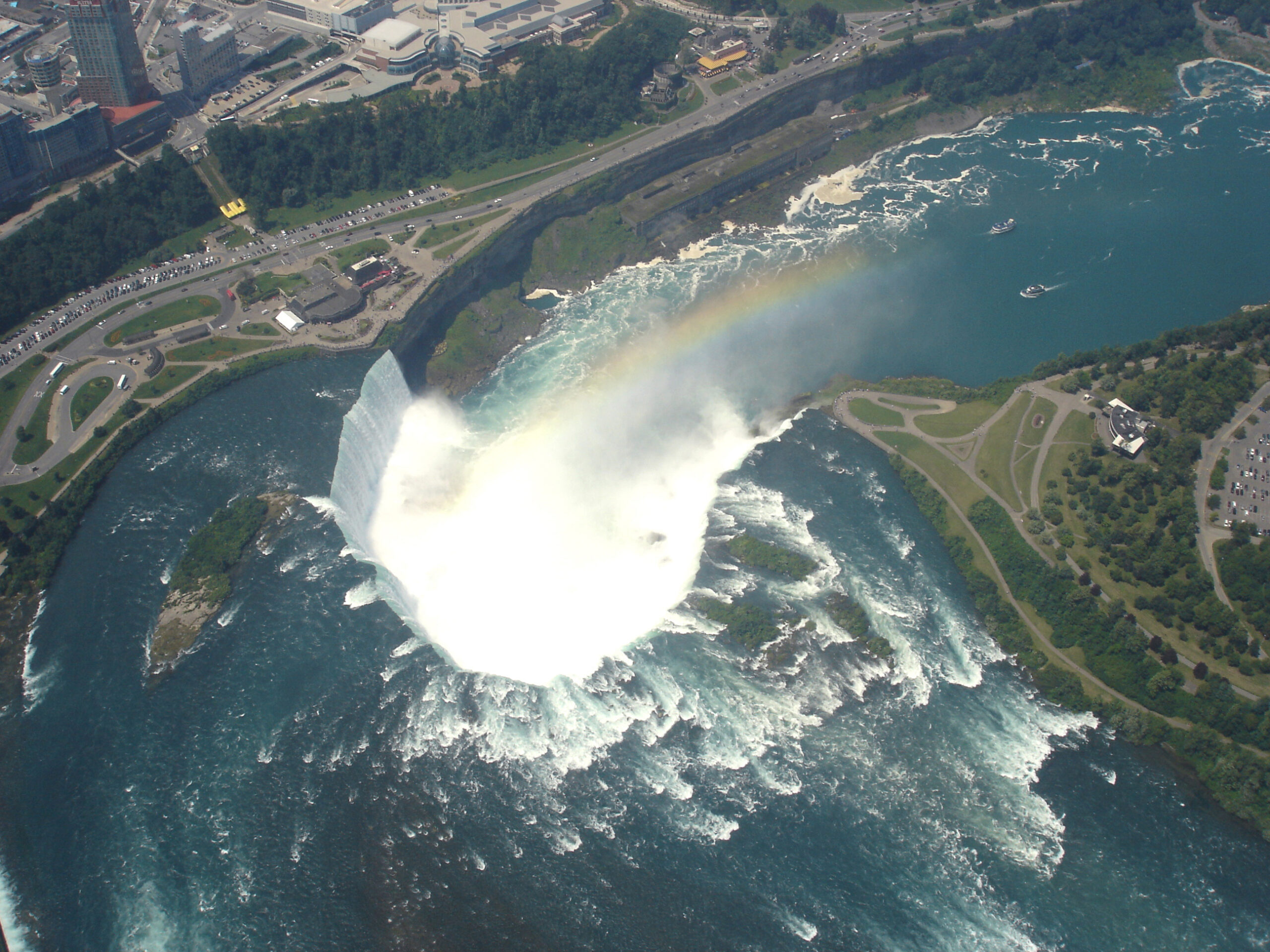
My first view of the falls, at the railing of the overlook closest to the car park, produced the response that I suspect many first-time visitors produce and then don’t admit to: is this it? The photographs suggest something that fills the entire frame of the camera and overwhelms every other element of the scene. The falls in person are large, but the context is large too, and the visual processing of a scene that includes car parks and hotels and the American side visible across the gorge produces a more complicated image than the photographs have prepared you for. I said “is this it?” and Ashley, who was watching my face, laughed in a way that suggested she had seen this response before.

We took the funicular up to the higher viewpoint, which is what the response requires. From the elevated position, with the full arc of the Horseshoe Falls visible and the volume of water comprehensible as a continuous roar rather than a visual spectacle, the scale arrives properly. The mist rising from the base of the falls, visible from several kilometres, is produced by water dropping fifty-seven metres at roughly six million cubic feet per minute, which is a number that doesn’t mean very much until you are standing above it and watching the whole mass of Lake Erie tumbling over the edge in an apparently continuous and apparently inexhaustible supply. The word magnificent resists me because it is too small, but it is the right kind of word. The view from the top earns what the view from the bottom didn’t quite deliver.

The facts about Niagara are facts about water in very large quantities doing what water does
over geological time, which is a category of fact that is difficult to make feel vivid.

We ate at a restaurant at the top of the hill with a view through the windows that would have been distracting in any other context and was, here, the reasonable accompaniment to a meal that was straightforward and good. The drive back to Toronto through the Ontario countryside, with Ashley navigating and the heated seats of the rented Chrysler making up for my inadequate jacket, gave us the time for the kind of conversation that years of intermittent contact and then a day together in a new context produces. It turned out well. It usually does, with people you met travelling, once you’ve accepted that the distance between visits is not the same as the distance between the people.

My first view of the falls, at the railing of the overlook closest to the car park, produced the response that I suspect many first-time...

Trip Guide

Niagara Falls, Canada/USA

1-2 days

☀️

Best time to visit

May to September offers the warmest weather and best visibility, though the falls are spectacular year-round. Winter visits provide fewer crowds but require warm clothing.

✈️

Getting there

Fly into Toronto Pearson International Airport, then rent a car for the 1.5-hour drive to Niagara Falls. Alternatively, take a bus or train from Toronto, which takes 1.5-2 hours.

🏨

Where to stay

Stay in Niagara Falls, Ontario on the Canadian side for the best views of Horseshoe Falls. Book accommodation with a view if possible, though prices are higher.

💰

Daily budget

Budget £80-150 per day including accommodation, food, activities, and local transport.

Flights £400-600
Stay £60-120
Food £15-30
Activities £20-40
Transport £10-15
Estimated daily total £105-205

Good to know

  • Take the funicular or elevator to the higher viewpoints for the full impact of the falls' scale
  • Visit early morning or late afternoon to avoid peak crowds
  • Bring waterproof clothing if taking boat tours near the falls
  • The mist from the falls can be seen from several kilometres away
  • Allow at least a full day to experience multiple viewpoints and perspectives

Niagara Falls is more expensive than average Canadian destinations due to tourist infrastructure. Many viewpoints are free, but paid attractions like boat tours and elevated viewing platforms add to costs.

Estimates based on research at time of writing. Check current rates before booking.