Dispatches from the Middle Kingdom

Dispatches from the Middle Kingdom

4 min read

Share

Copied!
Tweet WhatsApp

“The city itself, seen from street level rather than from the position of its political arrangements, is a place in extraordinary motion.”

China presents itself to the visitor in the form of scale. Not scale in the sense of impressive buildings or large crowds, though both of those are present in quantities that recalibrate your sense of what large means, but scale as the primary fact of the place, the thing through which every other thing is experienced. A third of a billion people live in the coastal provinces of the east. The city of Chongqing, which most people outside China have never heard of, has a population larger than Australia. The country’s rail network, already the largest in the world in 2011, is being expanded at a rate that would represent the entire rail infrastructure of several European countries. These numbers are accurate and they do not feel real until you are inside the geography they describe.

I have been in Beijing for the past several weeks and have been remiss about writing. This is partly because China is difficult to write about quickly, and partly because the internet situation here requires a kind of patience with connection speeds that does not lend itself to sitting down to compose something at length.

The city of Chongqing, which most people outside China have never heard of, has a population larger than Australia.

Dispatches from the Middle Kingdom

The Great Firewall, officially the Golden Shield Project, is the name for China’s internet censorship infrastructure, which blocks access to Google, Facebook, Twitter, YouTube, and a significant number of other platforms and search terms that the government has identified as politically sensitive. The system is sophisticated and continuously maintained, the list of blocked content updated in response to events, the technical methods of circumvention closed down and reopened in a permanent low-level contest between the government’s filtering capability and the VPN technology that allows access to blocked content through overseas servers. Everyone in Beijing who wants to access blocked content knows how to get around it. The government knows this. The situation is tolerated up to a point, and the point moves.

What cannot be found, searched for, or discussed on Chinese social media platforms without risk is the fifth of June. Or the fourth of June. Or the phrase that refers to both, which is “six four,” the date of the military crackdown on the pro-democracy demonstrations in Tiananmen Square in 1989 that killed an unknown number of people, the estimate ranging from hundreds to thousands depending on the source, the Chinese government having declined to permit independent investigation and having actively destroyed documentation of what happened in the days and weeks that followed. The image of the man in front of the tanks on Chang’an Avenue remains one of the most recognisable photographs of the twentieth century and cannot be displayed in China.

The city of Chongqing, which most people outside China have
never heard of, has a population larger than Australia.
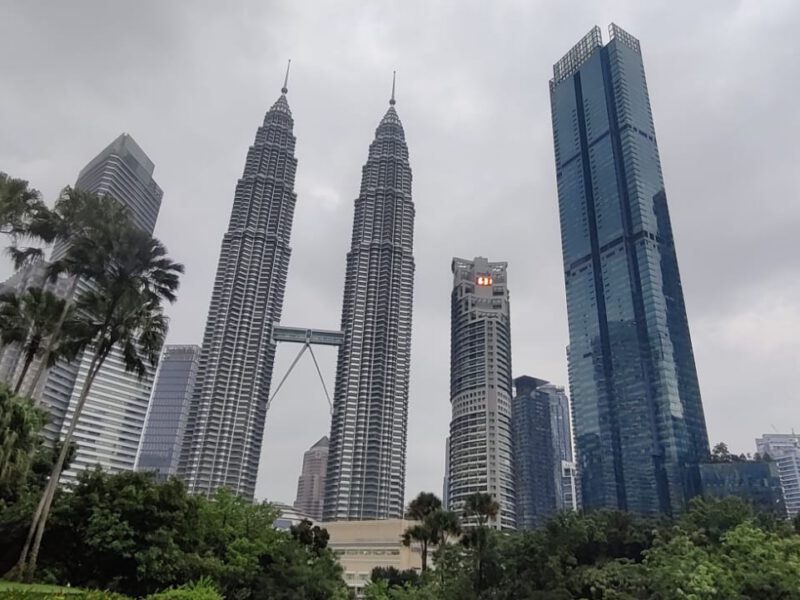
The city itself, seen from street level rather than from the position of its political arrangements, is a place in extraordinary motion. New districts are rising in what were agricultural outskirts five years ago. The subway network is expanding on a construction schedule that has no equivalent anywhere in the world. The hutong alleyways of the old residential quarters, some of which date from the Yuan dynasty of the thirteenth and fourteenth centuries, are being demolished to make way for development at a pace that architectural historians regard with alarm and municipal planners regard as progress. Both responses are correct in their own terms, which is often the situation when development happens faster than the society deciding on it has time to assess what is being lost.

The camera situation: I need to replace mine and cannot do so until I leave the country, because China prohibits the import of cameras with built-in GPS, which now includes most modern cameras. The iPhone camera is managing the record of the trip in the meantime. It is doing its best. The Great Wall is real. The food is very good. There is more to say about all of this and I will say it properly when I have the time and the connection speed to do so.

The image of the man in front of the tanks on Chang'an Avenue remains one of the most recognisable photographs of the twentieth century and cannot be displayed in China.