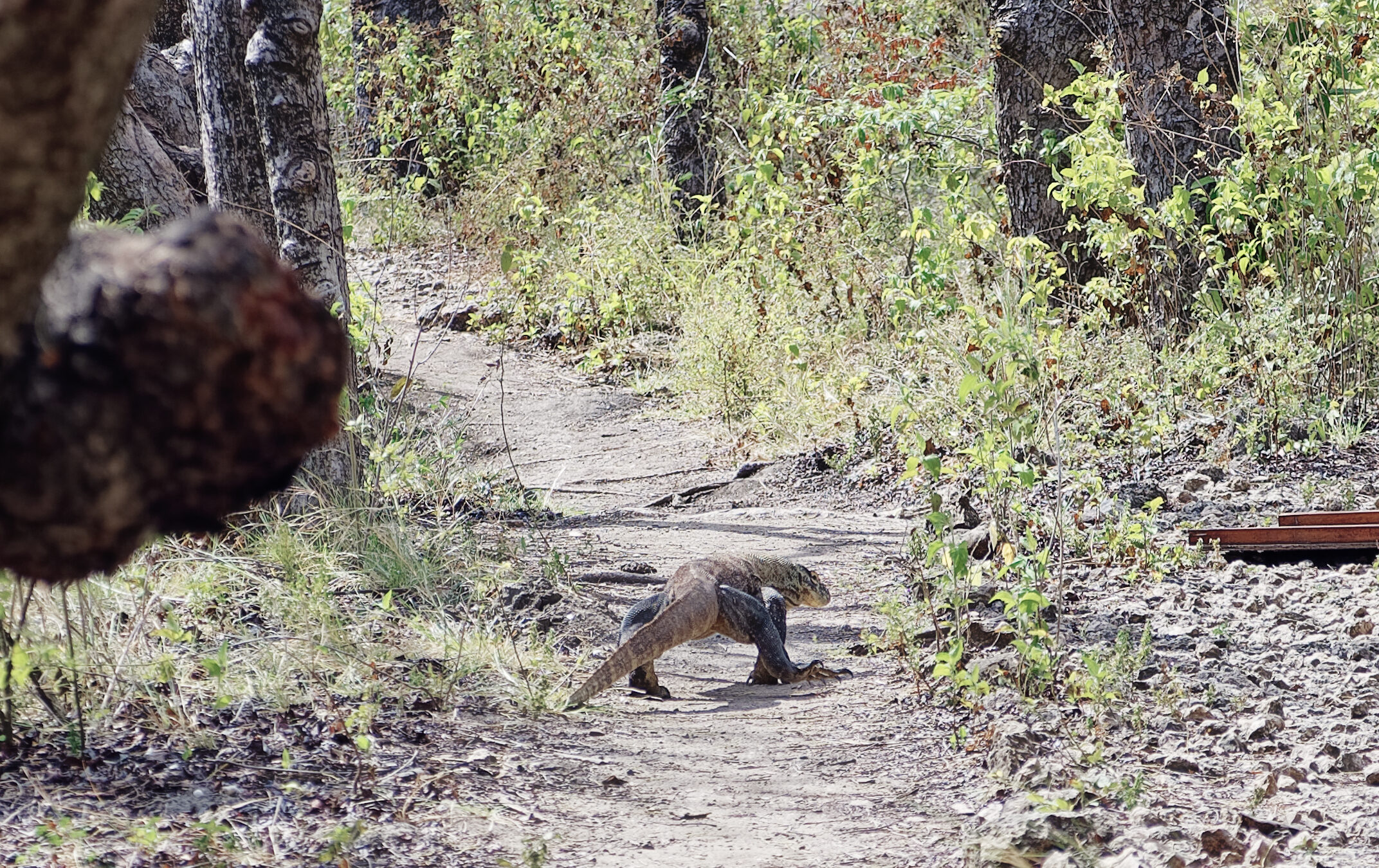
The Wallace Line runs through the middle of Indonesia, an invisible biogeographic boundary that separates the fauna of Asia from the fauna of Australasia with a sharpness that surprised the naturalist Alfred Russel Wallace when he first mapped it in 1859 and that continues to surprise anyone who crosses it and notices how abruptly the birds and mammals change. West of the line: tigers, orangutans, rhinoceros, animals related to the large mammal fauna of the Asian mainland. East of the line: marsupials, cockatoos, the megapode birds that incubate their eggs in volcanic heat, species that exist nowhere else in the world and that evolved in isolation on the Australian continental shelf through the tens of millions of years that a deep-water channel, the Lombok Strait, prevented land-based animal migration between the two regions even during the ice age sea level drops that connected other island chains. Komodo sits just east of the line, in the transition zone between the two biogeographic worlds, a dry and volcanic island in the Lesser Sundas where the most famous large lizard on earth has been evolving for the past four million years.
The Komodo dragon, Varanus komodoensis, is the largest living species of lizard, reaching three metres in length and eighty kilograms in weight in exceptional specimens, with a mean of about sixty kilograms for adult males. It is the apex predator of Komodo and the surrounding islands, hunting deer, pigs, water buffalo, and occasionally humans with a combination of physical power and a venom system that was the subject of scientific debate for decades: the dragons were long believed to kill through bacterial infection from their saliva, the accumulated consequence of feeding on carrion in the tropical heat, but more recent research identified that glands in the lower jaw produce anticoagulant venom that prevents the blood of bitten prey from clotting, causing wound shock and cardiovascular collapse. Both mechanisms may operate, the bacterial and the venomous, which gives the animal a functional redundancy in its killing strategy that seems almost excessive for something that can already run at twenty kilometres per hour for short distances.
Komodo sits just east of the line, in the transition zone between the two biogeographic worlds, a dry and volcanic island in the Lesser Sundas...



Share